
Formative vs Summative Assessment: A Complete Guide for Adult Education
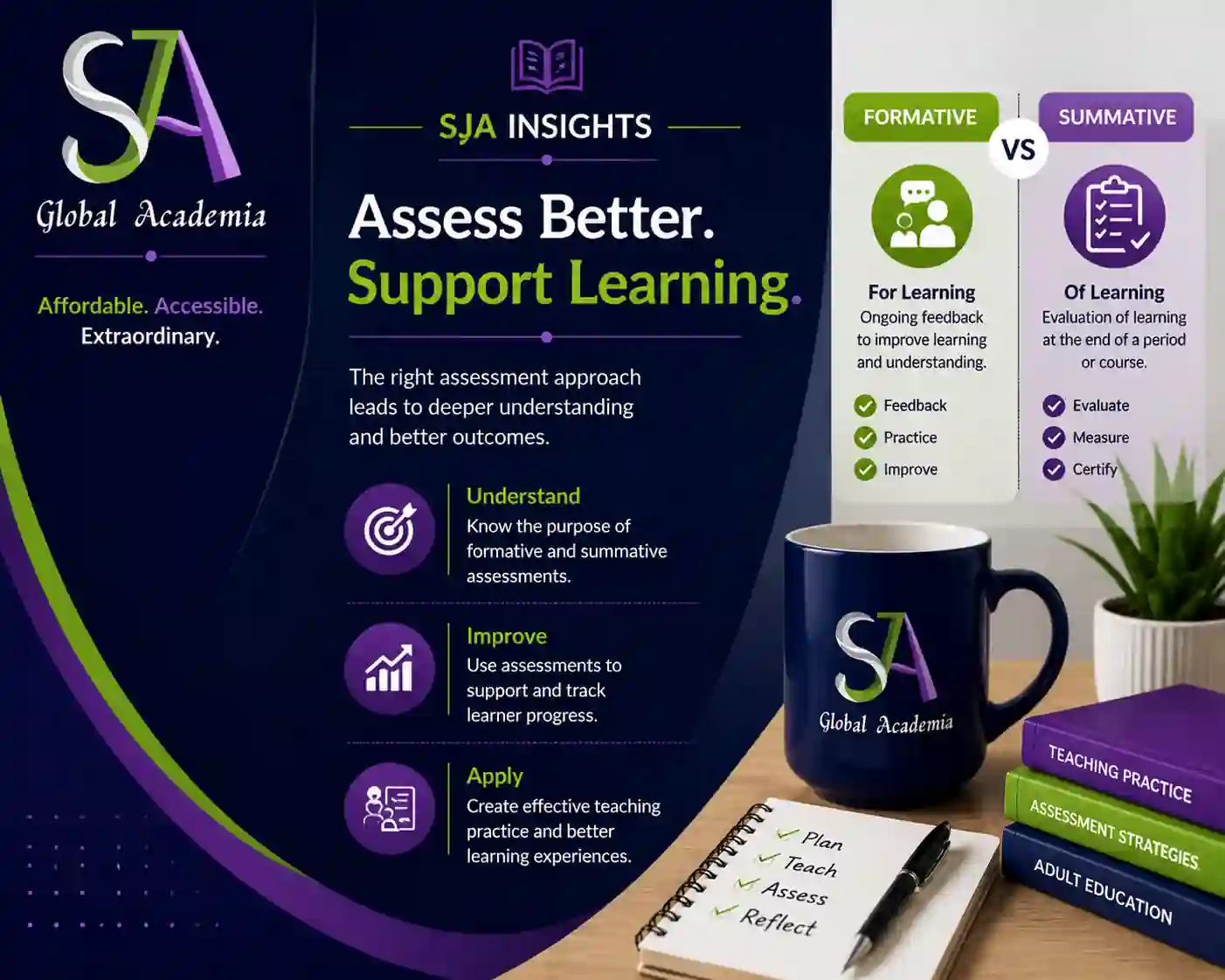
Formative vs Summative Assessment: Understanding the Key Differences
Formative vs Summative Assessment is about how you use evidence of learning.
Formative assessment helps learners improve. You check understanding, give feedback and decide what to teach or practise next.
Summative assessment judges achievement. You review evidence against the required outcomes or criteria after a stage of learning.
Adult education needs both. Use ongoing checks to support learning and planned assessments to make fair decisions.
The method alone does not tell you which type it is. A quiz can guide the next lesson or contribute to a final result. Its purpose and use matter.
What Is Formative Assessment?
Use formative assessment while learners still have time to improve. Find out what they understand and where they need help.
Useful methods include:
- Short questions and quizzes.
- Class discussion and peer feedback.
- Draft assignments.
- Watching learners practise a skill.
- Exit tickets at the end of a lesson.
For example, ask learners to explain one idea before they leave. Review their answers. If several share the same misunderstanding, revisit it next time.
The key step is using the evidence. A quiz without feedback or a response to its results may miss the chance to improve learning.
Develop these skills through the Level 3 AET, Level 4 CET or Level 5 Diploma in Teaching.
What Is Summative Assessment?
Summative assessment checks whether a learner has met the required standard. It may take place after a unit, module or course.
Evidence may include a final assignment, exam, practical demonstration, assessed observation or completed portfolio. Follow the qualification's assessment rules.
For example, an assessor reviews a completed portfolio and judges it against every required criterion. The decision must be supported by valid, authentic, reliable and sufficient evidence.
Summative tasks can carry more pressure because they contribute to final decisions. Make the brief, criteria and conditions clear in advance. Give feedback after the decision so the learner knows what they achieved or still needs to do.
Explore SJA's Assessor and IQA courses to develop assessment skills.
Formative vs Summative Assessment Comparison
| Formative Assessment | Summative Assessment |
|---|---|
| Takes place during learning | Takes place at the end of learning |
| Focuses on feedback and improvement | Focuses on achievement and outcomes |
| Helps learners develop skills | Confirms whether standards have been achieved |
| Usually lower pressure | Often linked to final decisions or certification |
Although they have different purposes, formative and summative assessment work together. Formative assessment prepares learners for success, while summative assessment confirms achievement.
Choosing the Right Assessment Methods for Adult Learners
Start with the criteria and the learner's needs. Adult learners may bring useful work experience, but they may also need support with writing, digital skills or confidence.
Ask:
- Am I checking knowledge, practical skills or both?
- Which methods does the qualification allow?
- Can the learner gather the required workplace evidence?
- What support or agreed adjustment is needed?
A diagnostic check at the start can help you plan teaching. Ongoing formative checks then show progress. Summative assessment judges achievement against the standard.
Observation may suit a practical skill. Questions or discussion can explore the reasons behind the learner's actions. Written work alone cannot replace required evidence of practice.
Compare the ACWE, AVRA and CAVA routes by the setting in which you assess.
Record the purpose of each assessment method in your vocational assessment plan. A short question during a lesson may guide further teaching, while a later task may contribute to a final decision. For a teaching example, use our micro-teaching guide to plan a brief activity with a clear objective and an appropriate check of learning.
How Feedback Improves Learning Outcomes
Useful feedback identifies a strength, explains a gap and gives the learner a clear next step.
For example, “Your plan gave clear instructions. Add a check of understanding after each activity, then try the plan with your group.” This is more useful than “Add more detail”.
Allow time for the learner to act on feedback. Ask them to revise a draft, practise a skill or explain how they will change their approach.
Check the result at the next review. Formative vs Summative Assessment helps you decide whether that review is guiding further learning or judging final achievement.
How Internal Quality Assurance Supports Assessment Quality
Internal quality assurance (IQA) checks that assessment decisions are sound and consistent.
IQAs may sample evidence, observe assessors, review records and support staff. Standardisation helps assessors compare how they apply the criteria.
Use the findings to correct gaps and improve future assessment. Keep clear records of feedback and follow-up actions.
Check regulated qualification details through the official qualification search.
SJA offers the Level 4 IQA Award and Lead IQA Certificate. Check the practical access and evidence requirements before enrolling.
Develop Your Assessment and Teaching Skills
Build your skills through a cycle of planning, assessment, feedback and review.
Choose one improvement to test. You might use an exit ticket, give clearer feedback on a draft or review a practical checklist. Record what happened and what you will change next.
The Education and Training Foundation's Professional Standards for Teachers and Trainers can support reflection on your practice.
Explore SJA's Teacher Training Courses or ask for guidance through the consultation service.
Develop Your Assessment and Teaching Skills
Frequently Asked Questions
What is the difference between formative and summative assessment?
Formative assessment supports learning through feedback, while summative assessment evaluates achievement after learning has taken place.
Which assessment methods are used in adult education?
Common methods include observation, questioning, assignments, professional discussion, practical demonstrations and portfolio evidence.
How does IQA support assessment quality?
IQA supports consistent, fair and reliable assessment decisions through review, standardisation and continuous improvement.