Currently Empty: £0.00



sjatraining25
- May 17, 2026
- Comment 0
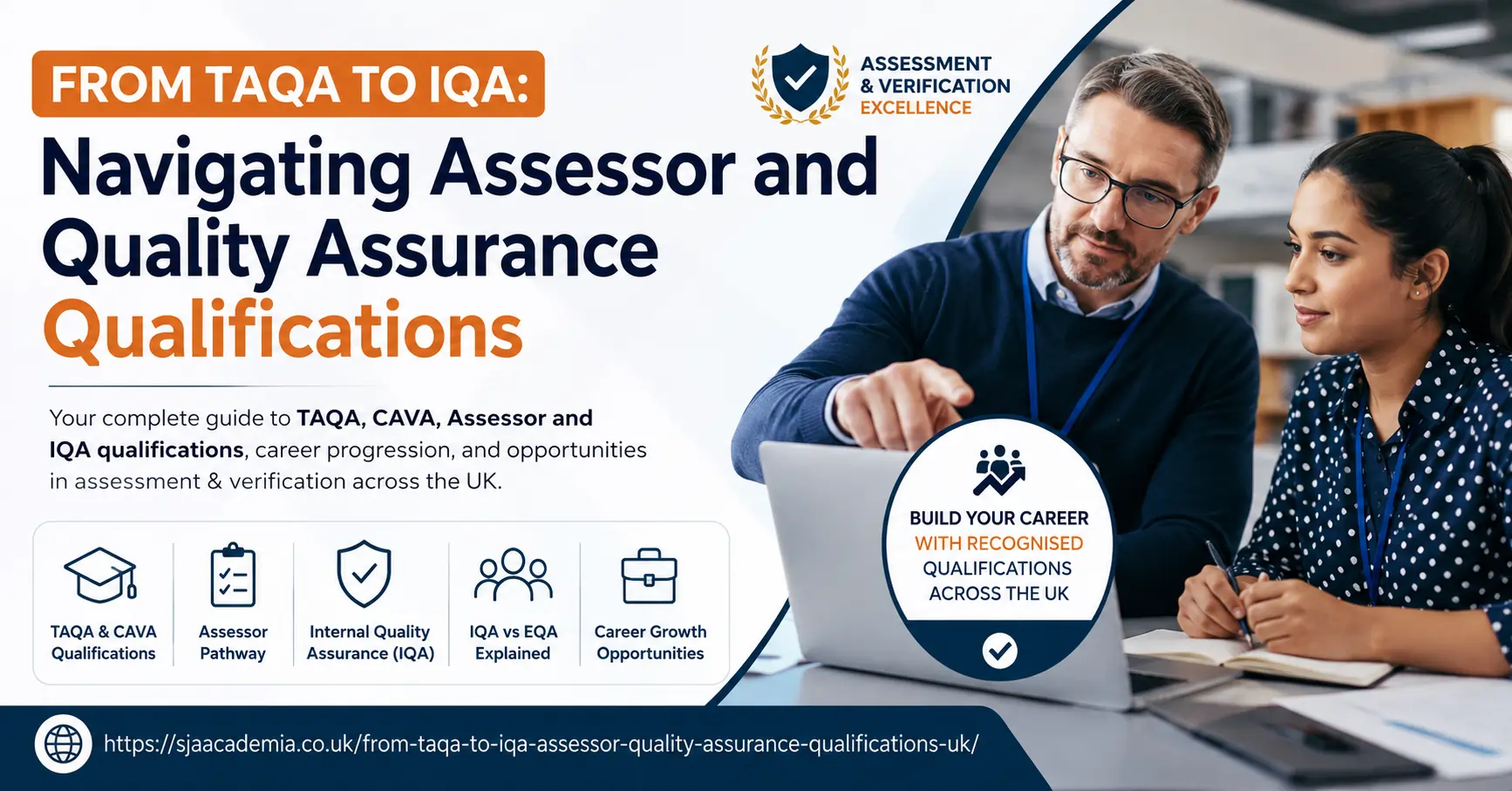
The demand for qualified assessors and Internal Quality Assurance (IQA) professionals across the UK is skyrocketing. From colleges and apprenticeship providers to corporate training departments, organizations are actively hunting for experts who can maintain rigorous assessment standards. While this surge opens incredible doors for career progression, higher pay, and role stability, taking the first step often feels like drowning in an alphabet soup. If terms like TAQA, CAVA, IQA, and EQA have left you feeling overwhelmed and unsure of which path fits your career goals, you are not alone.
Whether you are looking to earn your first assessor credential or are an experienced assessor ready to transition into a strategic internal quality assurance role, this comprehensive guide is your roadmap. We break down the jargon into plain English, map out your progression options, and show you how to navigate these essential qualifications flexibly around your busy schedule.
Why More Assessors Are Moving Into Internal Quality Assurance
Many assessors eventually reach a point where they want more responsibility, stronger career progression, and better earning opportunities. That is one of the biggest reasons why Internal Quality Assurance roles continue attracting experienced assessors across the UK.
Assessors mainly focus on evaluating learner performance and collecting evidence of competence. Internal quality assurers focus on maintaining consistency, supporting assessors, and ensuring assessment decisions meet awarding body standards.
This progression matters because training providers now face increased pressure to maintain quality assurance standards. Employers want professionals who understand learner evidence, assessment criteria, occupational competence, and quality assurance procedures.
Professionals who move into IQA roles often gain access to senior positions within colleges, apprenticeship providers, and vocational training organisations. Many Internal Quality Assurance professionals eventually progress into lead IQA, compliance, curriculum quality, or management positions. For many learners, the journey begins with Assessment & Verification qualifications such as the TAQA suite or CAVA qualifications.
Understanding the TAQA Suite and CAVA Qualifications
One of the most confusing areas for learners involves understanding the relationship between TAQA and CAVA qualifications. TAQA stands for Training, Assessment and Quality Assurance. It replaced older assessor awards and became the recognised framework for assessor and quality-assurance qualifications in the UK vocational education sector.
The TAQA suite includes several qualification pathways depending on the learner’s career goals and workplace responsibilities. Some units focus on understanding assessment principles, while others qualify learners to assess occupational competence within workplace environments. CAVA, which stands for Certificate in Assessing Vocational Achievement, remains one of the most recognised qualifications within the TAQA framework. Many employers specifically search for candidates with CAVA because the qualification supports both workplace and classroom assessment.
That flexibility makes careers with CAVA particularly attractive for professionals working in health and social care, education, construction, business administration, and apprenticeship delivery. Many learners searching for assessor qualifications want to know whether CAVA supports long-term career progression. In most cases, it does. CAVA qualifications often become the foundation for future progression into Internal Quality Assurance roles. Professionals who already work with learners frequently choose CAVA because it provides a broader qualification pathway compared to smaller assessor awards.
Assessor vs IQA Qualifications UK: Which Path Fits Your Career?
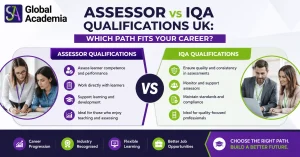
Many learners search for “assessor vs IQA qualifications UK” because they want to avoid wasting time or money on the wrong qualification. The right pathway depends largely on your current role and your long-term career plans.
If you want to work directly with learners, observe practical competence, assess workplace performance, and support vocational development, assessor qualifications usually make the most sense. If you already assess learners and want to move into leadership, monitoring, standardisation, and quality assurance responsibilities, IQA qualifications become the better progression route.
Assessors spend most of their time working directly with learners. They review learner evidence, conduct observations, complete assessment planning, and provide developmental feedback. Internal quality assurers focus more on monitoring assessor decisions, reviewing assessment consistency, supporting assessor development, and maintaining compliance standards across training programmes.
An assessor qualification helps professionals enter vocational assessment roles. An IQA qualification helps professionals supervise and improve assessment quality within organisations. Many professionals eventually complete both qualifications because the combination creates stronger long-term career opportunities within vocational education and training.
How Internal Quality Assurance Supports Training Standards
Internal Quality Assurance plays a major role in maintaining the credibility of vocational qualifications across the UK. Without effective Internal Quality Assurance systems, assessment decisions can become inconsistent. Learners may receive unfair outcomes, and training providers risk serious compliance issues with awarding organisations. That is why employers increasingly prioritise qualified IQAs who understand assessment systems and quality assurance frameworks.
Internal quality assurers help ensure assessors apply assessment criteria correctly, collect valid learner evidence, maintain consistent standards, and follow proper assessment procedures. Training providers also rely on Internal Quality Assurance to improve assessor performance, strengthen standardisation processes, and protect qualification integrity.
Modern vocational education depends heavily on strong quality assurance systems. Colleges, apprenticeship providers, and private training centres all need qualified professionals who understand assessment and verification processes properly. Professionals with Internal Quality Assurance qualifications often become highly valuable because they support both learner success and organisational compliance.
IQA vs EQA: What’s the Difference?
Many learners researching quality assurance qualifications eventually ask about IQA vs EQA because the two roles appear closely connected. Although both focus on quality assurance, their responsibilities differ significantly. Internal Quality Assurance happens within the training organisation. IQAs work internally to monitor assessor performance, maintain assessment consistency, and support quality improvement.
External Quality Assurance happens outside the organisation. EQAs work for awarding bodies and evaluate whether training providers meet national qualification standards. An IQA supports assessment quality internally, while an EQA audits assessment quality externally. Internal quality assurers usually review learner portfolios, sample assessment decisions, conduct standardisation meetings, observe assessor practice, and support assessor development.
External quality assurers focus more on auditing centres, reviewing compliance procedures, monitoring qualification delivery standards, and ensuring organisations follow awarding body requirements correctly. Most professionals begin with assessor qualifications before progressing into IQA roles. After gaining significant experience in Internal Quality Assurance, some professionals eventually move into EQA opportunities. Understanding IQA vs EQA helps learners see the full career pathway available within assessment and verification.
Careers With CAVA and IQA Qualifications
One of the biggest reasons why assessor and quality-assurance qualifications remain popular involves the variety of career opportunities they create. Many industries across the UK continue searching for qualified assessors and Internal Quality Assurance professionals. As apprenticeship programmes and vocational education continue expanding, the demand for experienced assessment professionals also continues growing.
Careers with CAVA often include vocational assessor positions, apprenticeship assessor roles, workplace assessment opportunities, trainer assessor careers, and functional skills assessment positions. After progressing into IQA qualifications, professionals often move into internal verifier, lead IQA, curriculum quality, quality assurance coordinator, and compliance management roles.
Some professionals eventually progress further into External Quality Assurance positions or training management careers. The combination of assessor qualifications and Internal Quality Assurance qualifications often improves long-term earning potential, professional credibility, and career stability. For professionals already working in education, health and social care, or vocational training, these qualifications can create a clear progression route into senior positions.
How Portfolio Preparation Works for Assessor and IQA Courses
Portfolio preparation remains one of the biggest concerns for learners starting assessor or IQA qualifications. Many professionals already have strong industry experience but feel unsure about how to collect evidence or meet qualification requirements. In reality, portfolio preparation becomes far easier when learners understand what assessors and Internal Quality Assurance professionals actually look for. Most portfolios focus on demonstrating competence within real workplace environments. Evidence often includes learner observations, assessment decisions, professional discussions, witness testimonies, feedback records, assessment plans, and quality assurance documentation.
For assessor qualifications, portfolio preparation mainly focuses on learner assessment activities and occupational competence evidence. For IQA qualifications, the portfolio usually focuses more on sampling activities, standardisation records, monitoring assessor decisions, and supporting assessment quality processes.
Training providers that offer structured guidance, tutor feedback, and practical support often help learners complete portfolios more confidently and efficiently. That support becomes especially important for adult learners balancing work commitments, family responsibilities, and professional development goals.
How Long Does It Take to Become an IQA?
The timeline for becoming an IQA depends on previous experience, workplace access, and the type of qualification pathway chosen. Professionals who already work as assessors often progress into Internal Quality Assurance more smoothly because they already understand learner evidence, assessment criteria, and vocational assessment systems. Many learners complete CAVA or other assessor qualifications first before progressing into IQA qualifications. Flexible online learning options now make assessment and verification qualifications far more accessible for working professionals across the UK. Many learners can study around full-time employment without putting their careers on hold.
However, employers value competence and practical understanding more than speed alone. Strong Internal Quality Assurance professionals understand compliance, assessment consistency, learner support, and standardisation processes properly. A qualification completed without genuine understanding rarely supports long-term career progression.
How to Choose the Right Assessment and Verification Qualification
Choosing the right Assessment & Verification qualification starts with understanding your long-term career goals. If you want to assess learners directly and work within vocational education or workplace assessment, assessor qualifications such as CAVA usually provide the strongest starting point.
If you already assess learners and want progression into quality assurance, compliance, or leadership positions, IQA qualifications become the logical next step. Before enrolling, learners should consider their existing industry experience, workplace access, flexibility requirements, career ambitions, and preferred learning format.
Many professionals make the mistake of choosing qualifications based only on course price. Long-term career support, tutor guidance, qualification recognition, and portfolio assistance often matter far more than choosing the cheapest option. A high-quality assessment and verification programme should help learners build confidence, understand quality assurance systems, and develop practical vocational competence that employers value.
Frequently Asked Questions About TAQA, CAVA, and IQA Qualifications
What is the difference between TAQA and IQA qualifications?
TAQA refers to the overall Training, Assessment and Quality Assurance framework used within vocational education. IQA qualifications specifically focus on Internal Quality Assurance responsibilities such as monitoring assessors, reviewing assessment decisions, and maintaining assessment consistency.
Do I need a CAVA qualification before becoming an IQA?
Many employers prefer candidates who already understand vocational assessment before progressing into quality assurance roles. CAVA qualifications often provide the strongest foundation for future Internal Quality Assurance careers.
Can I complete assessor qualifications online?
Yes. Many recognised training providers now offer flexible online assessor qualifications with tutor support, digital portfolio systems, and remote learning options designed for working professionals.
What jobs can I get with assessor qualifications?
Assessor qualifications can support careers in vocational assessment, apprenticeship delivery, workplace assessment, functional skills assessment, and trainer assessor positions across multiple industries.
What jobs can I get after completing IQA qualifications?
IQA qualifications can support progression into Internal Quality Assurance, internal verifier, quality coordinator, curriculum quality, and compliance management roles.
What is the difference between IQA vs EQA?
IQAs work internally within training organisations to monitor assessment quality and assessor consistency. EQAs work externally for awarding bodies to audit centres and review compliance standards.
Is portfolio preparation difficult?
Most learners find portfolio preparation manageable when they receive clear guidance, structured support, and regular tutor feedback throughout the qualification process.
Are TAQA qualifications recognised across the UK?
Yes. Recognised Assessment & Verification qualifications such as TAQA and CAVA are widely accepted across vocational education, apprenticeships, adult education, and workplace training sectors throughout the UK.
Final Thoughts
The pathway from TAQA to IQA creates strong long-term opportunities for professionals who want career progression within vocational education and training. Whether you want to become an assessor, progress into Internal Quality Assurance, or eventually move into leadership and compliance positions, choosing the right qualification pathway matters.
Professionals who invest in assessor/IQA qualifications today position themselves for growing opportunities across education, apprenticeships, health and social care, and vocational training sectors throughout the UK. If you are ready to build a long-term future in assessment and verification, this is the ideal time to explore the qualification pathway that matches your professional goals.