Currently Empty: £0.00



sjatraining25
- April 17, 2026
- Comment 0
If you work in assessment, training, education, or learner support, you have likely seen the terms IQA and EQA many times. For many people, the confusion starts here. Both roles focus on standards, fairness, and learner outcomes, but they do not do the same job.
That matters more than people think.
If you want to progress your career, improve centre performance, or choose the right qualification, understanding the difference between internal and external quality assurance can save time and help you make better decisions.
For some people, the goal is promotion. For others, it is confidence before applying for a new role. Many simply want to know which route makes sense now. This guide explains internal and external quality assurance in simple terms, shows how the roles differ, and helps you decide what to do next.
What Is Quality Assurance in Assessment and Education?
Quality assurance is the process of making sure assessment decisions are fair, accurate, consistent, and reliable.
In practical terms, it helps training centres, colleges, universities, and awarding organisations maintain standards. It protects learners, supports assessors, and reduces errors that can damage trust.
This applies across many settings, including:
- Apprenticeships
- Vocational training
- Adult learning
- Colleges
- Workplace learning
- Academic quality assurance systems
- University quality assurance processes
Without quality assurance, two learners could complete the same work and receive different outcomes. That creates risk for centres and frustration for learners.
What Is Internal Quality Assurance (IQA)?
Internal Quality Assurance, often called IQA, happens inside the training provider or centre. The IQA role focuses on monitoring assessor decisions and improving assessment practice. It is an internal process designed to keep standards strong before any outside review takes place.
An IQA may be responsible for sampling learner work, checking assessor decisions, reviewing feedback quality, supporting new assessors, running standardisation meetings, monitoring compliance records, reviewing assessment plans, and identifying training needs within the team. For many centres, a strong IQA system prevents problems long before they grow into bigger issues.
What Is External Quality Assurance (EQA)?
External Quality Assurance takes place through an outside body, often an awarding organisation or regulatory partner.
The EQA role reviews whether a centre is meeting required standards. This creates independent oversight and helps maintain consistency across multiple centres.
An EQA may review assessment records, IQA processes, learner evidence, staff competence, policies and procedures, standardisation activity, and compliance with awarding body requirements.
This is why EQA visits can feel important for providers. A positive review builds confidence, while poor findings can lead to action plans, delays, or reputational issues.
In some sectors, similar systems support external quality assurance in UK university environments through broader academic quality assurance and institutional review frameworks.
Difference Between Internal and External Quality Assurance
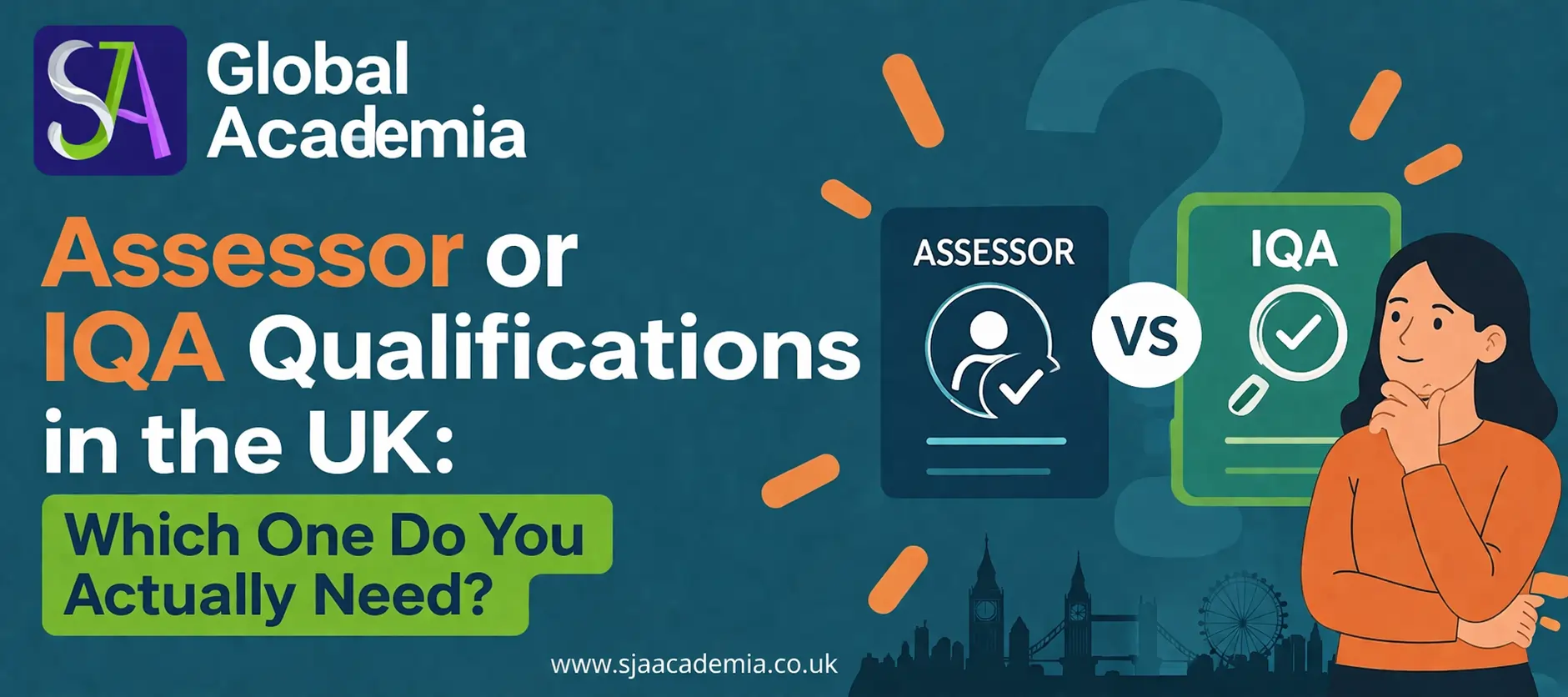
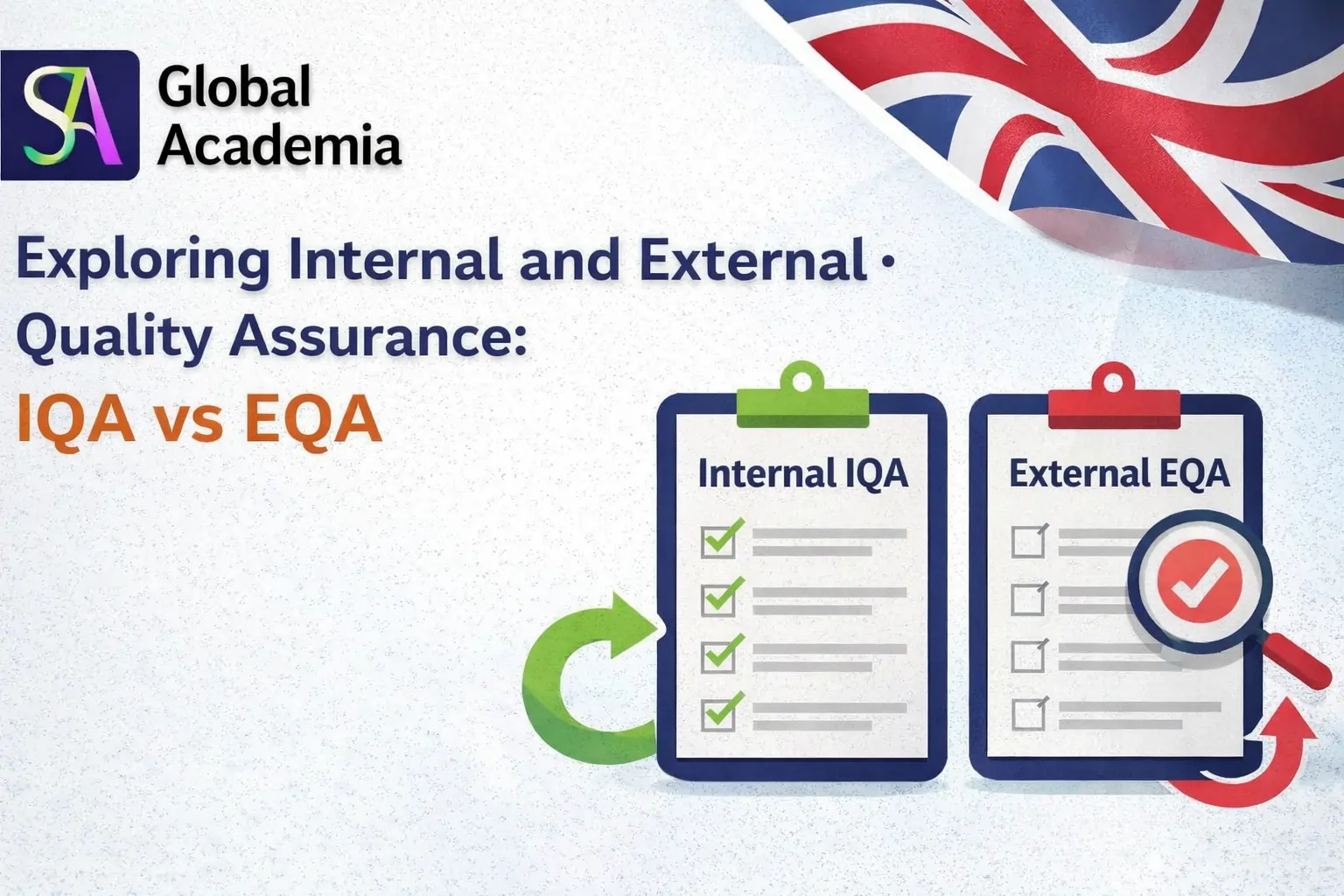
Many people search for the difference between internal and external quality assurance because the titles sound similar. The easiest way to understand it is responsibility. Internal Quality Assurance (IQA) works within the centre to monitor and improve assessment quality. External Quality Assurance (EQA) works from outside the centre to confirm standards are being met.
| Area | IQA | EQA |
| Position | Internal | External |
| Main Focus | Improve assessor decisions | Confirm centre compliance |
| Frequency | Ongoing | Periodic review |
| Works With | Assessors and staff | Centre management and IQA team |
| Goal | Consistency and development | Standardisation and accountability |
Both roles matter. One builds quality daily. The other confirms quality independently.
Internal vs External Quality Assurance in Universities and Colleges
Quality assurance is not limited to vocational assessment.
Many colleges and higher education institutions use formal systems to protect standards, student outcomes, and programme quality. This often falls under academic quality assurance and university quality assurance.
Examples may include:
- Programme review
- External examiner systems
- Internal moderation
- Curriculum review
- Teaching quality monitoring
- Student feedback processes
The principles remain similar. Internal checks improve quality. External review adds confidence and accountability.
Is IQA or EQA Better for Your Career?
There is no single answer. The right route depends on where you are now and where you want to go next. IQA may suit you if you already assess learners, want more responsibility, enjoy mentoring staff, want a management pathway, or prefer day-to-day operational leadership.
EQA may suit you if you have strong IQA experience, understand compliance deeply, enjoy reviewing systems, want broader sector exposure, or prefer independent quality roles. For many people, IQA comes first. EQA often becomes realistic after gaining internal quality assurance experience.
How to Progress from Assessor to IQA
This is one of the most common career moves in the sector. If you already assess learners, moving into IQA can increase responsibility, improve earning potential, and open leadership opportunities.
The usual path includes:
- Build solid assessor experience
- Strengthen record-keeping and compliance knowledge
- Learn sampling and standardisation methods
- Complete recognised assessor/IQA qualifications
- Apply for internal verifier or IQA roles
Many learners also ask about moving from TAQA to IQA. This can be a natural next step when you already hold assessor qualifications and want progression.
Best Assessment & Verification Courses for Career Growth
Choosing the right course matters because the wrong level can waste time and money.
Many people start by comparing Assessment & Verification courses that match their current role and future goals.
You may need:
- Assessor qualifications if you are new to assessment
- IQA qualifications if you monitor assessors
- Combined pathways if you want broader progression
- Flexible online study if you work full-time
At SJA Academia, many learners choose qualifications because they want practical progression, not just a certificate..
Common Problems Centres Face Without Strong Quality Assurance
When centres do not have strong internal systems in place, small issues often turn into bigger operational problems over time. Inconsistent assessor decisions can appear across different learners, creating confusion and unfair outcomes. Poor or unclear learner feedback can also slow progress and affect motivation.
Missing evidence is another common issue, especially when record-keeping is not properly structured. This often leads to delayed certification and extra workload for staff trying to fix gaps at the last minute. In more serious cases, centres may struggle during audits, resulting in failed checks or required improvement actions.
Without clear processes, staff confusion becomes more common, particularly when roles and expectations are not well defined. This can also increase learner complaints and reduce overall confidence in the training provider.
As pressure builds, many centres only realise the impact during external reviews or EQA visits, when issues become more visible and harder to fix quickly. A strong IQA process helps prevent these problems by identifying gaps early, improving consistency, and reducing stress across the entire centre
How to Choose the Right Qualification Now
Many people delay progress because they keep comparing options without taking action. A better approach is to step back and look at your current situation honestly. The right qualification is not about choosing the most advanced option, but about choosing the one that fits your experience, goals, and available time.
Start by asking yourself whether you already assess learners in your current role, and whether you are looking for promotion in the near future. Think about whether you need flexible study options that fit around work and personal responsibilities, and whether you are more interested in internal leadership roles or external quality review positions.
It is also important to consider your long-term direction, not just your next step. Some people want steady progression within their organisation, while others aim for wider opportunities across the sector. Once these points are clear, choosing the right qualification becomes much easier and more practical, rather than overwhelming
Frequently Asked Questions and Answer
What does IQA stand for?
IQA stands for Internal Quality Assurance. It focuses on checking and improving assessment quality within a centre.
What does EQA stand for?
EQA stands for External Quality Assurance. It is carried out by an outside body to confirm standards are being met.
What is the difference between internal and external quality assurance?
Internal quality assurance supports and monitors assessments within the organisation. External quality assurance independently reviews whether the organisation meets required standards.
Can I become an IQA if I am already an assessor?
Yes. This is one of the most common progression routes. Many assessors move into IQA after gaining experience and completing the right qualification.
Is EQA a senior role?
In many cases, yes. EQA roles often require previous assessment and IQA experience plus strong compliance knowledge.
Which qualification is best for becoming an IQA?
That depends on your current experience. Most people need recognised assessor and IQA qualifications that match their role.
Are quality assurance roles in demand?
Many providers need skilled staff who understand standards, learner outcomes, and compliance. Demand can be strong across vocational and training sectors.
Can I study while working full-time?
Yes. Many learners choose flexible online options so they can continue working while qualifying.
Final Thoughts
If you feel confused by IQA and EQA, you are not alone. Many capable professionals delay progress because the titles seem more complicated than they are. The truth is simpler. IQA helps maintain quality from within. EQA confirms quality from outside.
If you already work in assessment, IQA may be your strongest next step. If you have deeper quality assurance experience, EQA may become the long-term route. The important thing is to choose a qualification path that fits your current role, future goals, and real schedule.
At SJA Academia, many learners begin by exploring practical qualifications that help them move forward with confidence rather than staying stuck in research mode.