Currently Empty: £0.00



sjatraining25
- April 20, 2026
- Comment 0
If you work in adult education, training, or further education, you have likely heard the phrase formative vs summative assessment in education many times. Yet many tutors, assessors, and trainers still feel unsure about when to use each method, how they affect learner progress, and what good practice looks like in real teaching environments.
That confusion is common. You may know assessments matter, but choosing the right approach can feel harder when learners have mixed abilities, different confidence levels, and varied goals. The good news is that once you understand the difference between formative and summative assessment, teaching becomes clearer. You can track progress better, support learners earlier, and improve outcomes.
If you teach adults, deliver training, or want to strengthen your practice, this guide explains what each assessment type means, when to use them, and how to apply them effectively in real classrooms and training settings.
What Is the Difference Between Formative and Summative Assessment?
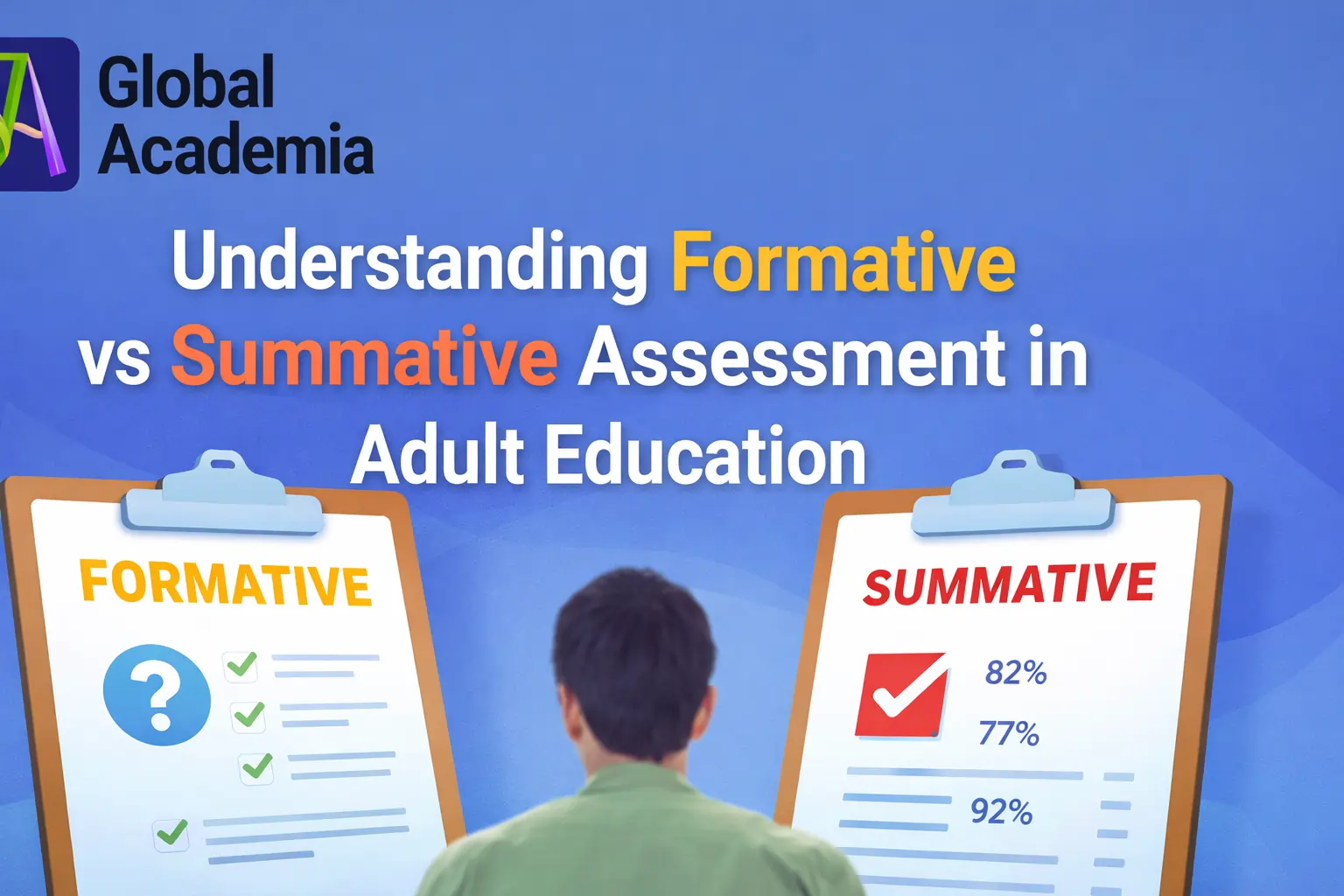
The easiest way to understand the difference between summative and formative assessment is to look at when each one happens and why it is used.
Formative assessment takes place during the learning process. It helps tutors check understanding, identify gaps early, and adjust teaching before learners reach the final stage.
Summative assessment happens after learning has been completed. It measures what the learner has achieved at the end of a unit, course, or programme.
Think of formative assessment as ongoing guidance that helps learners improve step by step. Summative assessment is the final judgement of what they have learned. Both approaches play an important role. Strong teaching does not rely on one alone. It uses both methods together to support progress and measure results.
| Feature | Formative Assessment | Summative Assessment |
| When It Happens | During learning | At the end of learning |
| Main Purpose | Improve progress and understanding | Measure final achievement |
| Focus | Feedback and development | Grades, marks or outcomes |
| Examples | Quizzes, discussions, draft work, practice tasks | Final exams, end-unit assignments, practical tests |
| Tutor Benefit | Identifies gaps early | Confirms standards achieved |
| Learner Benefit | Builds confidence and skills over time | Provides recognised results or certification |
In adult education, the most effective programmes usually combine regular formative checks with clear summative assessments at the end.
What Is a Formative Assessment?
Many people search for what a formative assessment is because they hear the term often but rarely see it explained simply.
A formative assessment is any activity that helps monitor learning while it is happening. It gives feedback to both the tutor and the learner.
Examples include:
- Short quizzes
- Group discussions
- Draft submissions
- Practice tasks
- Tutor questioning
- Peer feedback
- Skills demonstrations
The purpose is improvement, not judgment. This is why many adult educators value formative methods. Learners often return to study after years away from education. They may need reassurance, structure, and regular feedback before facing final graded tasks. Good tutors often use assessment planning early so these checks happen naturally throughout the course rather than being rushed at the end.
What Is Summative Assessment?
Summative assessment measures achievement after learning has taken place.
Examples include:
- Final exams
- End of unit assignments
- Observed practical assessments
- Coursework submissions
- Professional portfolios
- Standardised tests
These assessments often carry marks, grades, or pass/fail outcomes. In adult education, summative tasks can feel stressful for learners who balance jobs, family life, and study. That is why effective preparation matters so much. When tutors support learners with mock tasks, revision guidance, and portfolio preparation, final assessments usually become far more manageable.
Formative Assessment vs Summative Assessment: Which Is Better?
Many people compare formative assessment vs summative assessment as though one must be better than the other. In practice, they serve different purposes and work best when used together. The real question is not which one is better. It is whether each method is being used at the right time.
If formative checks are missing, learners may continue making mistakes until the final assessment. If summative assessment is missing, there may be no reliable way to confirm achievement or award certification.
The most effective teaching systems use both methods in balance.
| Assessment Type | Best Used For | Main Benefit |
| Formative Assessment | During lessons or throughout a course | Improves progress through feedback |
| Summative Assessment | At the end of a unit or programme | Confirms final achievement |
For example, a vocational tutor may use weekly progress reviews, practice tasks and feedback sessions during the programme, followed by a final practical observation or graded assignment at the end. This approach supports learners throughout the journey while still providing a clear final outcome.
Why Formative Assessment Works So Well in Adult Education
Adult learners often arrive with very different experiences. Some are confident professionals. Others may feel nervous after years away from study. Some learn quickly through discussion. Others need time, repetition and practical examples. This is where formative assessment becomes powerful because it shows how assessment fits diverse learners.
It allows tutors to adapt teaching in real time by:
- Changing pace
- Revisiting weak areas
- Offering one-to-one support
- Adjusting resources
- Building confidence gradually
This flexibility often improves retention and achievement rates.
Why Summative Assessment Still Matters
Continuous feedback is valuable, but it does not remove the need for formal assessment. In many learning environments, there still needs to be a clear and reliable way to measure what a learner has achieved.
This is why summative assessment continues to play an important role. Employers, awarding bodies and training providers often need evidence that required standards have been met. They need confidence that learners can apply the knowledge and skills expected at the end of a course or programme.
Summative assessment helps to:
- Confirm competence and readiness for the next step
- Measure achievement against learning outcomes
- Support certification and recognised qualifications
- Maintain quality standards and consistency
- Build learner credibility with employers or providers
For many adult learners, this final proof can be highly valuable. It may help secure a promotion, support a career change or strengthen future job applications. When paired with strong formative feedback throughout the course, summative assessment becomes more than a final result. It becomes an important milestone in the learning styles progress.
Common Problems Tutors Face With Assessment
Many tutors understand assessment theory well, yet applying it consistently in real teaching environments can be far more challenging. Adult education settings often include time pressure, mixed learner needs and practical barriers that make assessment harder to manage. Recognising these common issues is the first step towards improving results for both tutors and learners.
Learners Fear Final Assessments
Many adult learners worry about exams, observations or graded assignments. Some may have had negative past experiences in education, while others fear failure after returning to study later in life. Without reassurance and regular preparation, anxiety can reduce performance even when learners are capable.
Mixed Ability Groups
It is common for one class to include learners with very different starting points. Some may progress quickly and need extra challenges, while others need more support, confidence and time. This can make fair and effective assessment more difficult if tasks are not planned carefully.
Limited Time for Assessment
Busy teaching schedules often leave assessment tasks until the end of the programme. When this happens, tutors may feel rushed and learners may not receive enough opportunities to improve before final grading. Good planning helps spread assessment naturally across the course.
Weak Evidence Collection
Some learners complete strong work but fail to organise or present evidence correctly. This is especially common with portfolios, written records or workplace evidence. Without clear guidance, capable learners can lose marks through poor presentation rather than poor ability.
Inconsistent Feedback
Feedback has the greatest value when it is clear, specific, and timely. If comments are vague, delayed, or difficult to apply, learners often repeat the same mistakes and lose motivation. Constructive feedback should always help the learner know what to improve next.
Why Professional Development Matters
These challenges are common, but they can be improved with the right training and support. This is why many professionals choose teaching and lecturing to strengthen classroom delivery, improve assessment practice, and build greater confidence in supporting learner success.
How to Use Formative and Summative Assessment Together
The most effective teaching programmes do not choose between formative and summative assessment. They use both methods together in a planned and practical way.
A strong approach often begins with early diagnostic checks. These help tutors understand each learner’s starting point, previous knowledge, and areas where support may be needed from the outset. As the course progresses, short formative tasks should be used regularly to monitor learning. These may include discussions, quizzes, draft work, practice activities, or skills checks. The aim is to identify issues early and guide improvement before the final assessment takes place.
Feedback should always be clear, specific, and easy to act on. Learners need to know what they are doing well, what needs improvement, and what steps to take next. Confidence can then be built through practice tasks, revision activities, and opportunities to apply feedback over time.
The course should finish with a well-structured summative assessment that links directly to the learning outcomes. This allows learners to demonstrate what they have achieved in a fair and meaningful way. When formative and summative assessments are combined properly, learners face fewer surprises, feel better prepared, and often achieve stronger final results.
Best Assessment Methods for Adult Learners
Not every assessment method suits every learner or every subject. Adult education often works best when tutors use a range of approaches rather than relying on a single format.
Professional discussions can be highly effective for learners who communicate knowledge better through speaking than writing. Workplace observations are valuable when practical competence needs to be assessed in real settings. Case studies allow learners to apply theory to realistic situations, while reflective journals help develop self-awareness and critical thinking.
Presentations can build confidence and communication skills. Skills demonstrations are ideal for vocational and hands-on learning. Written assignments remain useful where structured analysis is required, and digital submissions can provide flexibility for learners balancing study with work or family commitments.
Strong assessors choose methods that match the learner, the subject content, and the required standards. They also consider fairness, accessibility, and the best way for learners to demonstrate real ability. Many professionals strengthen these skills through assessment & Verification, which focuses on quality assurance, evidence-based decision-making, and reliable assessment judgments.
How CPD Improves Assessment Practice
Assessment practice is not fixed. Standards evolve, learner expectations change, and teaching methods continue to develop. Because of this, tutors and assessors need to keep improving their skills to stay effective and confident in their role.
This is where continuous professional development (CPD) becomes essential. Ongoing CPD helps tutors strengthen every part of the assessment process. It supports better decision-making and improves the overall learner experience.
Through regular CPD, tutors can:
- Improve the quality and clarity of feedback so learners understand exactly how to progress
- Apply more inclusive assessment strategies that support learners with different needs and backgrounds
- Stay up to date with current regulations, standards, and awarding body requirements
- Build greater confidence when making grading and assessment decisions
- Develop stronger skills in using digital tools for assessment, tracking, and evidence collection
Even small improvements in these areas can have a noticeable impact on learner motivation, progress, and final achievement.
How to Know If Your Current Assessment Strategy Needs Improvement
Many tutors continue using the same assessment approach without checking whether it still works effectively. Over time, small issues can build up and affect learner success.
You can review your current practice by asking a few simple questions:
- Do learners clearly understand what they need to do to succeed?
- Do they receive feedback early enough to make meaningful improvements?
- Do some learners consistently fall behind without being identified in time?
- Are the overall results lower than expected, even when teaching quality is strong?
- Do assessments feel supportive and developmental, or stressful and unclear?
If you find yourself answering “yes” to several of these concerns, it may be a sign that your assessment system needs refinement. Improving assessment practice does not always require major changes. In many cases, small adjustments to feedback, timing, and planning can significantly improve learner outcomes and overall course effectiveness
Frequently Asked Questions
What is the formative definition?
The formative definition refers to assessment that takes place during the learning process. Its main purpose is to improve learning through ongoing feedback, guidance and support rather than to grade final performance.
What is a formative assessment in simple terms?
A formative assessment is a quick check of understanding during learning. It helps learners see what they are doing well and what they need to improve before they complete their final assessment.
What is summative assessment?
Summative assessment is a final evaluation used at the end of a course, unit or programme. It measures overall achievement and confirms whether the learner has met the required standards.
What is the difference between summative and formative?
The key difference is timing and purpose. Formative assessment happens during learning and focuses on improvement, while summative assessment happens at the end and focuses on final results and achievement.
Why do adult learners prefer formative assessment?
Many adult learners prefer formative assessment because it provides regular feedback, reduces pressure and helps build confidence step by step. It also gives them time to improve before final assessment.
Can one course use both methods?
Yes. In fact, most effective courses combine both approaches. Formative assessment supports learning throughout the course, while summative assessment confirms achievement at the end.
How can tutors improve assessment quality?
Tutors can improve assessment quality by using clear success criteria, giving timely and specific feedback, planning assessments effectively and engaging in regular professional development.
Which qualification helps assessors most?
The most suitable qualification depends on your role and career goals. However, assessor and verifier qualifications are commonly used to develop strong assessment skills and maintain professional standards in education and training.
Final Thoughts
Formative and summative assessments both play vital roles in adult education. When used together, they help track progress, support learners, and measure outcomes effectively. By applying both methods strategically, tutors can improve teaching quality, boost learner confidence, and achieve better results in real classroom and training environments.