Currently Empty: £0.00



sjatraining25
- May 11, 2026
- Comment 0
Walking into a teaching assistant interview can feel intimidating, especially if you do not know what schools expect. Many candidates worry about safeguarding questions, classroom activities, SEN scenarios and how to answer confidently without sounding rehearsed. Others feel nervous because they are changing careers, applying without experience or returning to work after years away from education.
The good news is that schools are not searching for perfect candidates. They want reliable, calm and supportive people who can build positive relationships with pupils and work professionally with teachers and school staff.
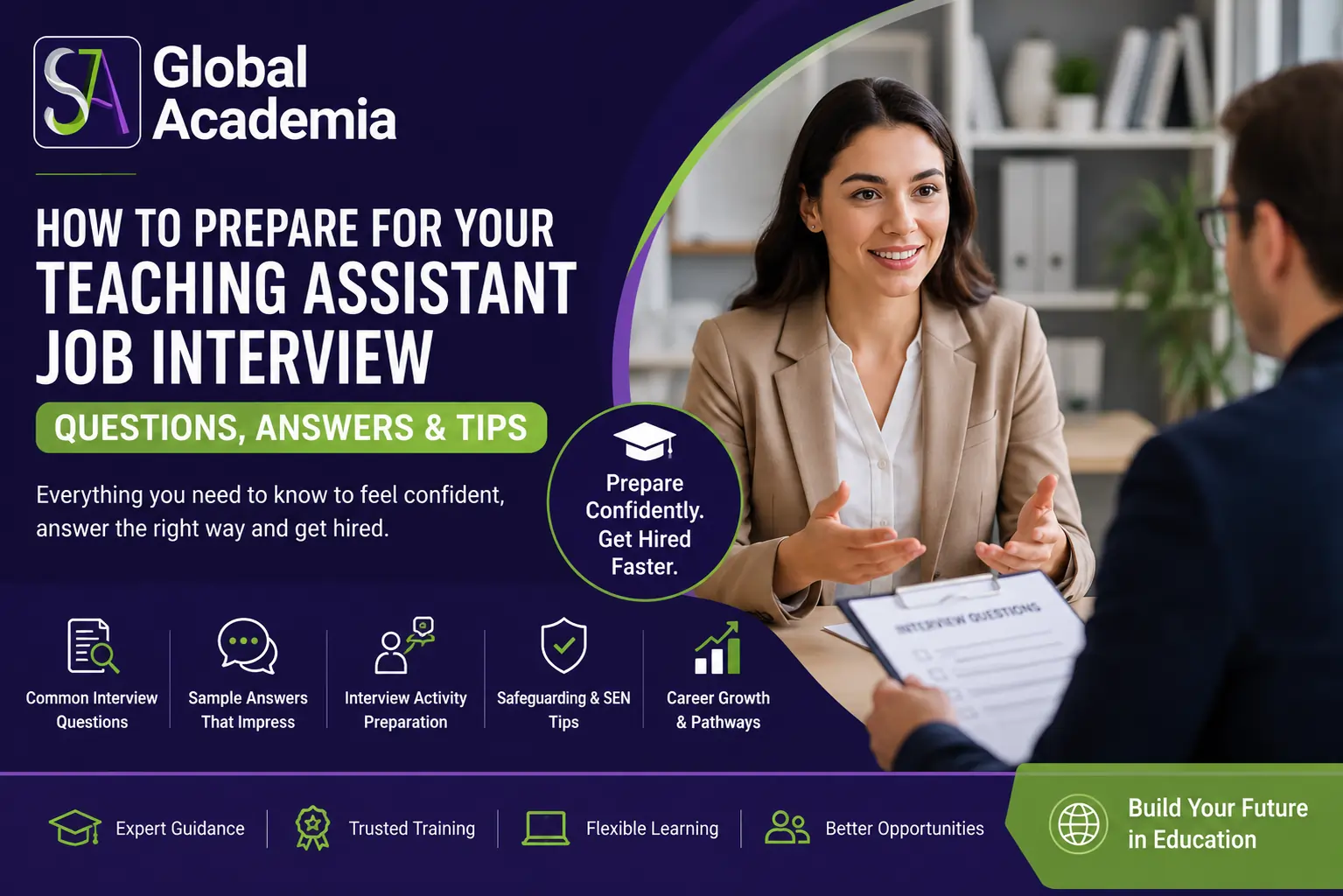
This guide covers the most common teaching assistant job interview questions UK schools ask, how to answer them naturally, what happens during a teaching assistant job interview activity, and how to stand out from other applicants. You will also learn what schools secretly assess during interviews, how to prepare for SEN TA roles and how qualifications such as Direct Learning Support courses can help you feel more confident before applying.
What Schools Really Look for During a Teaching Assistant Interview
Many applicants believe interview success depends only on qualifications. In reality, most schools focus more on communication, attitude and classroom behaviour.
Interview panels often ask themselves:
- Can this person stay calm around children?
- Can they support pupils professionally?
- Do they understand safeguarding?
- Will they work well with teachers?
- Can they manage challenging behaviour appropriately?
Schools want teaching assistants who can support learning without creating disruption in the classroom environment. They also look for candidates who show patience, adaptability and emotional awareness.
For SEN TA roles, schools usually pay even closer attention to behaviour management, emotional regulation support and communication skills.
If you do not have classroom experience yet, that does not automatically put you behind other candidates. Many successful teaching assistants come from childcare, customer service, healthcare, youth work and care support backgrounds because those roles build transferable skills schools value highly.
What Schools Secretly Assess During Teaching Assistant Interviews
Most competitors only discuss interview questions, but schools assess much more than your answers.
Even while you walk into the room, the interview panel observes:
- Your confidence level
- Professional behaviour
- Communication tone
- Patience
- Body language
- Listening skills
- Ability to stay calm under pressure
During a teaching assistant interview activity, schools often focus more on how you interact with pupils than whether you complete the task perfectly.
For example, if a child struggles with reading, interviewers usually want to see encouragement, patience and positive reinforcement instead of strict correction.
Schools also notice whether candidates:
- Smile naturally
- Speak clearly
- Respect classroom boundaries
- Stay positive during challenges
- Follow instructions carefully
These soft skills often separate successful candidates from unsuccessful ones.
Most Common Teaching Assistant Job Interview Questions UK Schools Ask
Preparing answers in advance can improve your confidence significantly. Many teachers recruitment questions and answers follow similar patterns because schools want to understand how candidates think in realistic classroom situations.
Why Do You Want to Be a Teaching Assistant?
This question helps schools understand your motivation for working in education.
Weak answers sound generic:
“I like children.”
Strong answers feel personal and professional:
“I enjoy supporting children’s learning and confidence. I want to help pupils feel encouraged in the classroom while working closely with teachers to create a positive learning environment.”
Schools want candidates who genuinely care about pupil development rather than applicants searching for any available role.
How Would You Support a Child With SEN?
This is one of the most common SEN TA interview questions in UK schools.
Interviewers want to hear that you understand patience, flexibility and personalised support strategies.
A strong answer should mention:
- Clear communication
- Positive reinforcement
- Patience
- Working alongside the teacher
- Adapting support to the child’s needs
Example:
“I would try to understand the pupil’s individual needs first. I would stay calm, use clear instructions and encourage participation while working closely with the class teacher to provide consistent support.”
This type of answer demonstrates emotional intelligence and classroom awareness.
What Would You Do if a Child Refused to Listen?
Behaviour management questions appear in almost every teaching assistant interview.
Schools want candidates who can stay professional under pressure.
Strong answers usually include:
- Staying calm
- Using positive language
- Redirecting behaviour
- Following school policies
- Asking the teacher for support when necessary
Avoid answers that sound aggressive or overly strict.
How Would You Handle a Safeguarding Concern?
Safeguarding questions make many candidates nervous, especially beginners.
Schools mainly want to hear that you understand reporting procedures correctly.
A safe answer:
“I would listen carefully, stay calm and report the concern immediately to the designated safeguarding lead following school procedures.”
Never say you would investigate the situation yourself.
Describe a Time You Worked in a Team
Teaching assistants work closely with teachers, SEN coordinators and support staff daily.
Use the STAR method:
- Situation
- Task
- Action
- Result
Even examples from retail, healthcare or volunteering can work well.
Why Should We Hire You?
This question gives you the opportunity to connect your strengths directly to the role.
A strong answer may include:
- Communication skills
- Patience
- Reliability
- Adaptability
- Passion for supporting pupils
Example:
“I am approachable, organised and calm under pressure. I work well with others and genuinely enjoy helping children build confidence and progress in their learning.”
Teaching Assistant Job Interview Activity: What Really Happens
Many candidates fear the teaching assistant job interview activity more than the interview questions themselves.
Schools use practical activities to observe how you behave naturally around pupils.
You are not expected to perform like an experienced teacher. Schools mainly want to see positive interaction, communication and professionalism.
Reading Activities
You may work with small groups of children and support reading exercises.
Interviewers observe:
- Patience
- Encouragement
- Communication style
- Listening skills
If a child struggles, stay calm and supportive rather than rushing them.
SEN Observation Activities
For SEN TA positions, schools often include behaviour observation tasks.
You may support pupils with:
- Autism
- ADHD
- Communication difficulties
- Emotional regulation challenges
Schools want candidates who remain calm, patient and encouraging.
For example, if a child becomes overwhelmed during an activity, interviewers prefer candidates who respond gently and professionally rather than trying to control the situation forcefully.
Behaviour Management Scenarios
Some schools create realistic classroom situations where pupils become distracted or disruptive.
The interview panel watches:
- Your reaction
- Communication approach
- Emotional control
- Professional boundaries
Positive behaviour support usually works better than strict authority.
Group Activities With Other Candidates
Some schools assess teamwork by placing candidates together during activities.
Avoid trying to dominate the conversation.
Strong candidates usually:
- Listen carefully
- Communicate respectfully
- Support others
- Contribute calmly
Phonics and Numeracy Demonstrations
Primary schools sometimes ask candidates to help pupils with literacy or maths tasks.
Focus on:
- Clear instructions
- Encouragement
- Confidence
- Positive interaction
You do not need advanced teaching knowledge to perform well.
Real SEN Classroom Situations Schools Use During Interviews
Most competitor articles mention SEN support briefly, but schools increasingly focus on practical SEN awareness. For SEN TA interviews, schools may assess how candidates respond to realistic classroom situations.
Supporting an Autistic Pupil During Sensory Overload
Interviewers may describe a situation where a child becomes overwhelmed by noise or classroom activity.
Strong responses usually involve:
- Staying calm
- Reducing stimulation
- Using reassuring communication
- Following school SEN strategies
Helping a Non-Verbal Child Participate
Schools may ask how you would encourage communication and engagement.
Good answers often mention:
- Patience
- Visual support
- Encouragement
- Working closely with teachers and SEN staff
Managing Emotional Outbursts
Behaviour escalation scenarios test emotional control and professionalism. Schools want candidates who avoid confrontation and maintain supportive communication.
How to Prepare for a Teaching Assistant Interview if You Feel Nervous
Many applicants never say it openly, but interview anxiety is extremely common.
Candidates often worry about:
- Forgetting answers
- Freezing during safeguarding questions
- Speaking confidently
- Managing classroom activities
- Competing against experienced applicants
Preparation reduces anxiety significantly.
Practice Speaking Out Loud
Reading answers silently is not enough.
Practice:
- Common interview questions
- Behaviour scenarios
- Safeguarding responses
- Classroom introductions
Speaking out loud improves confidence and communication flow.
Research the School Before the Interview
Check:
- School values
- Ofsted reports
- SEN support policies
- Behaviour expectations
Mentioning school values naturally during interviews shows preparation and professionalism.
Prepare Examples Using the STAR Method
Many teachers recruitment questions and answers require real examples.
Prepare stories related to:
- Teamwork
- Problem-solving
- Communication
- Supporting others
- Managing difficult situations
Do Mock Interview Practice
Mock interviews help candidates:
- Reduce nerves
- Improve confidence
- Structure answers clearly
- Handle pressure better
This becomes especially useful for candidates changing careers or applying without classroom experience.
How Direct Learning Support Courses Help Candidates Stand Out
Many schools prefer candidates who already understand classroom expectations, safeguarding and pupil support strategies.
This is why some applicants choose Direct Learning Support courses before applying for teaching assistant jobs.
These courses can help candidates develop:
- Classroom confidence
- Behaviour management awareness
- SEN support knowledge
- Safeguarding understanding
- Communication skills
For career changers and adult learners, flexible study options also make balancing work and study more manageable while preparing for education careers.
Candidates who understand school expectations often feel more confident during teaching assistant interviews because they already recognise common classroom scenarios.
TA vs HLTA: Which Career Path Is Right for You?
Many candidates begin researching TA vs HLTA roles while preparing for interviews because schools sometimes ask about long-term career goals.
Teaching assistants mainly support teachers and pupils during classroom activities.
HLTAs usually take on greater responsibilities such as:
- Leading small groups
- Supporting lesson delivery
- Covering lessons
- Assisting with planning activities
HLTA positions often offer higher salaries because they require more responsibility and classroom independence. Understanding the TA vs HLTA pathway can help candidates answer progression questions more confidently during interviews.
Long-Term Career Growth and the QTLS Roadmap
Some teaching assistants eventually progress into wider education and training roles.
Depending on experience and qualifications, possible progression routes may include:
- SEN specialist support
- Assessing and verification roles
- Adult education support
- Teacher training pathways
Some professionals also explore the QTLS roadmap to continue developing their education careers long term. Showing ambition and willingness to learn can leave a positive impression during interviews because schools value candidates interested in professional growth.
What To Do After Your Teaching Assistant Interview
Most candidates focus only on the interview itself and forget the follow-up stage. Simple professional steps after the interview can leave a strong impression.
Send a Professional Thank-You Message
A short thank-you email demonstrates professionalism and appreciation.
Keep it brief and polite.
Prepare for DBS and Reference Checks
Schools often move quickly once they choose successful candidates.
Prepare:
- Identification documents
- Employment history
- References
- DBS information
Reflect on Your Performance
Even if you do not get the role immediately, every interview improves your confidence and classroom awareness.
Many successful teaching assistants do not get hired on their first attempt. Consistent preparation and experience usually improve interview performance significantly over time.
Frequently Asked Questions About Teaching Assistant Interviews
What should I say in a teaching assistant interview?
Focus on communication, patience, teamwork and your interest in supporting children’s learning and wellbeing.
What happens during a teaching assistant job interview activity?
Schools may ask candidates to support reading, observe pupil behaviour or participate in classroom-based tasks to assess communication and professionalism.
What do schools ask in SEN TA interviews?
SEN TA interviews often include questions about behaviour management, emotional regulation, safeguarding and supporting pupils with additional learning needs.
Can I become a teaching assistant without experience?
Yes. Many schools hire candidates with transferable skills from childcare, healthcare, customer service or volunteering backgrounds.
What should I wear to a teaching assistant interview?
Wear professional but comfortable clothing suitable for working in a school environment.
How long does a teaching assistant interview usually last?
Most interviews last between 30 minutes and one hour depending on whether activities are included.
What skills should teaching assistants mention during interviews?
Communication, patience, teamwork, safeguarding awareness and adaptability are highly valued by schools.
How do I answer safeguarding questions confidently?
Stay calm and explain that you would report concerns immediately following school safeguarding procedures.
Is Level 3 required for teaching assistant jobs?
Not always. Some schools accept Level 2 qualifications or relevant experience depending on the role.
What is the difference between TA vs HLTA roles?
HLTAs usually have more classroom responsibilities and may support lesson delivery independently, while teaching assistants mainly support teachers and pupils during lessons.
Conclusion
Preparing for a teaching assistant interview becomes much easier when you understand what schools expect. By practicing common questions, preparing for classroom activities and improving your safeguarding knowledge, you can build confidence and stand out from other candidates. With the right preparation and support, you can start a rewarding career in education successfully.