Currently Empty: £0.00




sjatraining25
- April 8, 2026
- Comment 0
If you are thinking about working in education, or you are already in a support role, this is a question that comes up quite quickly.
You may be wondering what the real difference is between a teaching assistant and a higher-level teaching assistant. You may also be trying to understand whether it is worth progressing or if it is better to start simple and build experience first.
For some people, the goal is clear. They want a stable role in a school and a predictable routine. For others, the goal is progression, better pay, and more responsibility over time.
That is where this comparison becomes useful. It is not just about job titles. It is about choosing a path that fits your current situation and your next steps.
Can You Work as a Teaching Assistant or HLTA Without a Degree?
In most cases, yes. That is one of the reasons these roles are so popular. If you want to work as a teaching assistant, you usually do not need a degree. What matters more is having the right basic qualifications and a willingness to support learners.
For HLTA roles, the expectation is higher. You still may not need a degree, but you will usually need experience, stronger classroom skills, and evidence that you can take on more responsibility.
This is where many people feel unsure. It is not always clear what level to start at or how far they should go. If you are in that position, it often helps to step back and think about your starting point instead of trying to plan everything at once.
What Does a Teaching Assistant Actually Do?
A teaching assistant supports the teacher and helps students stay on track during lessons. In day-to-day work, this usually means helping individuals or small groups, preparing materials, and making sure students understand what they are learning.
You are not responsible for leading the class. Instead, you are there to support learning and help the classroom run smoothly. For many people, this is a practical and realistic way to enter education. It allows you to build experience without taking on too much too soon.
That is why it often becomes the first step for people exploring Teaching & Lecturing courses and trying to understand how education roles really work in practice.
What Does a Higher Level Teaching Assistant (HLTA) Do?
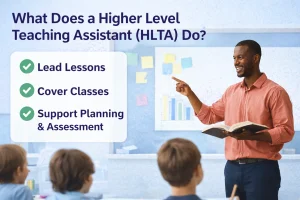
A higher-level teaching assistant takes on more responsibility and works with greater independence.
In some situations, you may lead lessons, cover classes, or support planning and assessment. You are still part of the support team, but your role moves closer to teaching. This shift is important. It changes how you work in the classroom and how others rely on you.
For people who already have experience as a teaching assistant, this can feel like a natural next step. For others, it can feel like a big jump. That is why it is important to think carefully about whether you are ready for that level of responsibility.
What Is the Real Difference Between a Teaching Assistant and HLTA?
The difference is not just in the job title. It is in how the role works day to day.
| Aspect | Teaching Assistant (TA) | Higher Level Teaching Assistant (HLTA) |
| Core Role | Supports learning | Helps deliver learning |
| Responsibility | Works under teacher supervision | Works more independently |
| Classroom Involvement | Assists individuals or small groups | May lead lessons or cover classes |
| Experience Level | Entry-level role | Requires prior experience |
| Career Stage | Starting point | Progression role |
| Decision Making | Limited | More responsibility in planning and support |
Many people only fully understand this after working in a school environment. What seems like a small step on paper can feel quite different in practice.
How Much Do Teaching Assistants and HLTAs Earn?
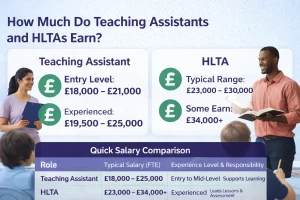
Salary is often one of the main reasons people compare these roles. Teaching assistants usually earn less because the role involves less responsibility and less independence. HLTAs earn more because they take on additional tasks such as leading lessons and supporting assessments.
However, the decision is not only about salary. It is also about workload, expectations, and long-term goals. Some people are happy staying in a teaching assistant role because it fits their lifestyle. Others prefer to move forward because they want growth and progression.
Which Qualification Do You Need to Start?
This is where many people get stuck.
If you want to become a teaching assistant, a Level 2 or Level 3 qualification is usually enough to get started. These qualifications help you understand classroom basics and improve your chances of getting hired.
If you are aiming for HLTA, the expectation is higher. You will usually need experience as well as a higher qualification level, often at Level 3 or Level 4.
The important thing is not to rush this decision. Choosing the right starting point matters more than choosing the highest level straight away.
If you are unsure, it often makes sense to explore teaching & lecturing courses that match your current experience instead of trying to jump too far ahead.
Which Role Makes More Sense for You Right Now?
This is the part that matters most.
If you are new to education, the teaching assistant role is usually the more realistic starting point. It gives you experience, confidence, and a better understanding of how classrooms work.
If you already have experience and feel ready for more responsibility, HLTA may be the right direction.
Some people try to skip steps and move straight to HLTA. In reality, most people benefit from building experience first.
It is not about moving fast. It is about moving in the right direction.
If you are still exploring options, looking into direct learning support roles can also help you understand where you fit before committing to a long-term path.
Can You Progress from Teaching Assistant to HLTA?
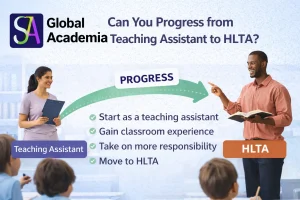
Yes, and this is one of the most common paths.
Many HLTAs start as teaching assistants and gradually take on more responsibility. Over time, they build the skills needed to move forward.
This progression often feels more natural because you are learning through real experience, not just theory.
If you are preparing for your next move, focusing on TA job interview preparation can also make a big difference when trying to secure your first or next role.
What Happens After HLTA?
For some people, HLTA is enough. It offers better pay and more responsibility without needing to move into full teaching.
For others, it becomes a stepping stone.
You may decide to specialise, such as becoming a SEN teaching assistant, or move into different directions depending on your interests.
Some people also explore teacher vs assessor career paths to decide whether they want to stay in classroom-based roles or move into training and assessment.
If your goal is long-term progression, following a QTLS roadmap, if they wish to progress to teaching can help you move forward in a more structured way.
What If You Are Still Unsure?
Most people searching for “teaching assistant vs higher-level teaching assistant” are not just comparing roles. They are trying to make a decision about their future.
If that is your situation, you do not need to decide everything today.
A simple and practical approach is to:
- Start with a role that fits your current situation
- Build experience over time
- Develop confidence in a real classroom environment
- Understand what responsibilities you are comfortable with
- Then decide your next step based on real understanding
For many people, that first step is not HLTA. It is gaining clarity and confidence through the right starting point.
Frequently Asked Questions
Can I work as a teaching assistant without a degree?
Yes, in most cases you can. Schools usually look for basic qualifications, such as Level 2 or Level 3, and a willingness to support learners.
Do I need to be a teaching assistant before becoming an HLTA?
In most cases, yes. HLTA is not an entry-level role and usually requires classroom experience.
Is HLTA the same as a teacher?
No. HLTAs can lead lessons, but they are not qualified teachers.
Is the salary difference between TA and HLTA significant?
There is usually a noticeable difference, but it varies depending on the school and responsibilities.
Which qualification should I choose if I am just starting?
A Level 2 or Level 3 qualification is usually the best starting point if you are new.
Can I move from teaching assistant to HLTA later?
Yes. This is the most common progression route.
Can HLTA lead to becoming a teacher?
Yes. Many people use HLTA as a step toward teaching or other education roles.
Can I study while working?
Yes, but it is important to choose a course that fits your schedule
Final Thoughts
The difference between a teaching assistant and an HLTA becomes clear once you focus on responsibility, experience, and long-term direction.
One is a starting point. The other is progression.
If you want a simple entry into education, the teaching assistant role makes sense. If you are ready for more responsibility and growth, HLTA may be the right next step. The key is to choose a path that fits your life now and gives you room to move forward with confidence.